Commercial Buildings Save Money By Saving Energy
Many people think new “gizmos” are the secret to reining in energy use, but that’s not necessarily the case. The way buildings are managed and operated can have an even bigger impact than the technology in the building. Before undertaking a major retrofit mine, your day-to-day operations for substantial savings.
Denmark Heating And Cooling offer the most comprehensive commercial HVAC/R service programs in the industry.
Our technicians can service your boilers, rooftop units, compressors, and chillers. We also provide preventive maintenance solutions to keep your system operating efficiently.
We can design, replace, or upgrade your equipment to optimize the performance of your facility, whether you have one building or multiple sites nationwide. Also, we can assess your facility’s energy needs and install and service energy saving solutions including variable speed drives, and building automation and control systems.
Before you begin, you have to know your starting point. this is something you can figure out yourself, but many companies can get free government assistance. The EPA’s Energy Star Program offers a set of tools called Portfolio Manager to help you gauge your energy and water use, and has developed spreadsheets that allow businesses in certain industries to judge by comparison their own consumption.
Re-Commissioning Building Systems
Commissioning, which simply means making sure building systems are running as designed, is an essential part of building construction, and because these systems degrade over time, they must be periodically retested. Such re-commissioning pays huge dividends, says a recent Department of Energy-sponsored study: a 15 percent reduction in energy use at a cost of just 27 cents per square foot, for a payback time of less than nine months.
Commissioning entails an analysis and a tune-up, and usually requires the services of an energy auditing mechanical contractor such as Denmark Heating and Cooling. Systems also have to be maintained and re-commissioned every three to five years. Denmark Heating and Cooling can then make recommendations for improving mechanical systems performances; for example, builders usually install oversize systems even though air conditioning operates most efficiently at full power. The upside: You can probably upgrade to a smaller system that uses less energy. Today’s heating and cooling and refrigerating systems are up to 40 percent more efficient than those built 20 years ago. If you cannot replace yours, if its not in the budget, improve it with a solid state variable speed motor drive that controls motors speed according to demand.
The biggest energy draw in a commercial facility is the process, which also adds to the plant cooling load. Processes vary across industries, but electric motors are common to most of them, and they are an easy place in which to find energy savings. New, modern highly efficient motors are up to eight percent more efficient than the oldest motors now deployed. A solid state variable speed drive that can be attached to motors on pumps and fans is an even more powerful tool; it can increase the system’s energy efficiency 50 percent, with a payback of as little as six months. These are some of the procedures Denmark Heating and Cooling can provide you with from the re-commissioning services we offer. Many of these products now qualify for government tax credits in commercial applications.
Wine Cellar Coolers
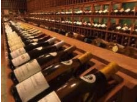
Wine Cellar Coolers are installed in wine storage areas to stabilize and improve the lives of most wines. By keeping wine at a constant temperature and humidity it preserves and stabilizes the taste and color of wine allowing it to age gracefully. We can design and install a cooler system that will suit your needs We have installed many hundreds of these units.
THE SCIENCE OF WINE AGING
Oxygen, Friend or Foe?
 Oxidation is both a wine’s enemy and a wine’s friend. When oxygen reacts with alcohol, it creates acetic acid or vinegar. Too many years in the cellar and that fine Bordeaux could be composed of more vinegar than alcohol–not something typically desired to accompany a filet mignon. Oxidation also alters the colors of wine. Just like a cut apple, the wine will turn brown when it comes in contact with the air. Aged red wine is naturally brick-colored, aged white is golden-brown, but too-brown colors are undesirable. Just as a little lemon juice added to that cut apple keeps it from browning, wines with higher acidities tend to turn brown less rapidly, and so are better candidates for aging.
But exposure to oxygen isn’t all bad. Oxygen helps the fruity flavors of a young wine fade and combine with the woodsy flavors from the barrel, creating something that is more “winey” than “fruity.” Age wine more, and it will develop earthy, nutty, flavors in alongside its fruity ones. Wine is said to breathe through the cork, and it does, for the influx of oxygen through the cork’s pores helps the wine mature. (Wine purists denounce the newer synthetic corks and screw caps for just this reason.) The oxidation of tartaric acid, for example, creates some of the tertiary aromas that eventually form the kind of bouquet that wine connoisseurs will pay top dollar for. Decanting wines in a wine decanter encourages oxidation and can improve a young wine’s flavor profile.
Age Wines in a Cool, Damp Place
The wide variety of subtle reactions that take place as wine ages require very specific conditions to create an optimal product. These are a stable temperature of around 55°, a relative humidity of around 70%, and protection from direct light. Wine experts have been able to quantify what the Romans knew to be true thousands of years ago wines age best under cool conditions. An 18° increase from the 55° baseline doubles the rate of chemical reactions in wine. But if chemical reactions age the wine, why not increase the temperature and get a decade’s worth of flavor complexity in a few years?
Unfortunately, there are no such shortcuts. A temperature of 55° is the perfect environment for the chemical reactions that result in good wine. But it’s too cold to allow other, undesirable reactions that can give a wine unwanted aromas. Even a short exposure to extreme temperatures can trigger unwanted reactions and ruin the wine. Wine ages best at a temperature that is both cool and constant. Wine cellar cooling systems are designed to maintain that perfect temperature in your cellar or cabinet.
The Perfect Balance
Wine aging is a science. A single bottle of wine can contain hundreds of chemical compounds that react over time. The reactions common to each type of wine are understood, and the type of changes in the aroma that occur in them are rarely surprising. But wine aging is also an art. Each crop of grapes is different. Each bottle of wine will age a little differently from the next; the perfect time to uncork a particular grape varietal will change with the region, the year, and the specific process the grapes undergo as they are being smashed and fermented into wine.
Ultimately, it’s all about balance. A perfectly aged wine will have an optimal combination of three things: fruit flavors, fermentation flavors, and aging flavors. Whether this takes a year and a half or more than ten years depends on the bottle and the conditions it is kept in. Understanding the science behind wine aging can’t provide a magic formula that tells us when to open that particular Merlot, but it can help us understand why it needs to be kept under controlled conditions. And it can even help us guess at what flavors it might be developing as the wine slowly turns deep, reddish-brown in that dark corner of our modern, climate-controlled version of Poe’s catacombs
Call us for your custom wine cellar building and design 1.734.722.3870
Government Mandates Changes
GOVERNMENT MANDATES CHANGES Air conditioners as of January 2009 are required to use ozone safe freons such as PURON or other approved substitutes. Most of the refrigerants such as R 22 are being discontinued this is leading to much higher refrigerant prices. There are many approved substitutes we can recommend.
SAVE BIG $$ Government mandated programs are now available; up to 1000 dollars cash or credit on selected new models of furnaces and air conditioners, call Barb for details.
Puron Refrigerant
Puron® Refrigerant is an environmentally sound refrigerant designed not to harm the earth’s ozone layer. Federal law requires all manufacturers to phase out ozone-depleting refrigerants in the next few years. Puron Refrigerant is approved by the US Environmental Protection Agency as a replacement from R-22.
SEER (Seasonal Energy Efficiency Ratio)
SEER is the measure of efficiency by which the cooling process of air conditioners and heat pumps is rated. The higher the SEER number, the greater the efficiency–and therefore greater energy savings. Today, U.S. regulatory agencies require all new products to have a 13.0 SEER rating or better. Denmark’s full line of air conditioners offers SEER ratings of up to 20.
Tax Credits
Post revision Nov. 2019
Current tax credits are:
A maximum credit of $50 for certain main air circulating fans.
$150 for a qualifying furnace, AC or boilers.
Please contact us with any questions.
The American Taxpayer Relief Act 0f 2012 has extended the tax credits that expired in 2012. This is for equipment that was installed anytime after December 31, 2012, and is listed in section 25C of the Internal Revenue Code.
According to AHRI, qualified equipment includes:
| Product Type | Tax Credit | Minimum Efficiency Requirements |
| Furnaces/ Boilers |
$150 | Natural Gas, Propane, or oil with an AFUE of not less than 95% |
| AC and HP | $300 | Split system central air conditioners that achieve 16 SEER and 13 EER; Packaged central air conditioners that achieve 14 SEER and 12 EER; Split system electric heat pumps that achieve 8.5 HSPF, 12.5 EER and 15 SEER; Package electric heat pumps that achieve 8.0 HSPF, 12 EER, and 14 SEER. |
| Advanced Main Air Circulating Fan | $50 | A fan used in a natural gas, propane, or oil furnace with an annual electricity use of no more than 2 percent of the total energy use of the furnace. |
| Water Heaters | Electric heat pump water heaters with energy factors of at least 2.0; and Natural gas, propane, or oil water heaters with energy factors of at least 0.82 or thermal efficiencies of at least 90 percent. |
IRS OFFERS TAX CREDITS FOR 2014 WHEN new air conditioners heat pumps and furnaces are installed that meet the new federal guidelines. A tax credit is different than a tax deduction in that it reduces taxes dollar for dollar. A tax deduction on the other hand only removes a percentage of tax that is owed. Call Denmark Heating and Cooling and we will show you how to maximize these tax savings. For more on tax credits
Please note, not all ENERGY STAR qualified products to qualify for a tax credit. These tax credits are available for a number of products at the highest efficiency levels, which typically cost much more than standard products. If for whatever reason, you decide not to purchase a product covered by the tax credit, you may still consider purchasing an ENERGY STAR product. ENERGY STAR distinguishes energy efficient products which, although they may cost more to purchase than standard models, will pay you back in lower energy bills within a reasonable amount of time, without a tax credit.
ENERGY STAR TAX CREDITS
Denmark Heating And Cooling would like to remind homeowners about the reinstatement of federal tax credits available on home improvements made in 2013 and 20014. Tax credits for residential products, which had expired at the end of 2012, are now available for improvements made during 2014 by way of the Economic Stabilization Act of 2008.
According to Energy Star®, replacing old heating and cooling equipment with Energy Star-rated equipment can reduce the average homeowner’s annual energy costs by $200 or more. When paired with a cumulative tax credit of 30 percent of the installed cost, up to $1,500, this creates an opportunity for homeowners to realize significant savings in 2014 and beyond.
Ultra high-efficiency products such as the new Bryant 18 SEER Condensing unit or the 17 SEER Heat Pump not only provide homeowners a tax credit, but also slash home energy consumption by improving the overall efficiency of your heating and cooling system.
For more details on the tax credit available on Heating and Cooling products, please visit www.energystar.gov.